Carbon and Its Compounds
Introduction to Carbon
Carbon is a very important non-metal element found widely in nature. Substances such as coal, charcoal and sooty are black in colour and are formed from carbon. The word carbon is derived from the Latin word meaning charcoal. Carbon generally appears black in colour and burns easily in air. When carbon burns, it produces heat and light along with black dense smoke. If a substance gives black dense smoke on burning and leaves a black residue, it confirms the presence of carbon in that substance.
Nowadays, materials like diamond, graphite and other forms of carbon are widely used. The study of carbon has increased greatly because carbon is the chief element of organic compounds. Carbon is a non-metal with atomic number 6 and atomic mass 12.
Sources of Carbon
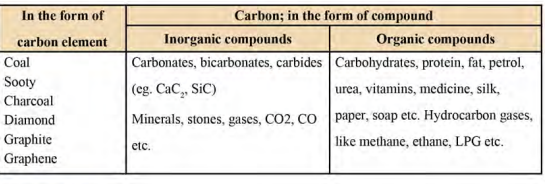
Carbon is found in nature in both free state and combined state. It is present in all living organisms and is considered a fundamental component of life. Carbon compounds are found in food, clothes, furniture, pen, pencil and many household items.
Proof that Wood and Sugar Contain Carbon
When wood is burnt, black coloured charcoal is obtained. Similarly, when sugar is heated, it first melts and gives a pleasant smell known as caramel. On further heating, sugar turns black and forms charcoal with an unpleasant smell. This proves that wood and sugar contain carbon.
Nature of Carbon
Carbon is an abnormal non-metal. It has six electrons, out of which four are present in the valence shell. To attain octet configuration, carbon shares its four valence electrons and forms four covalent bonds. Therefore, the valency of carbon is four. Due to this property, carbon forms millions of organic compounds.
Catenation
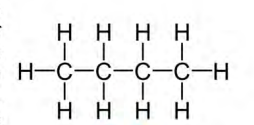
Catenation is the property of carbon by which carbon atoms bond with other carbon atoms through covalent bonds to form long chains or rings. Due to catenation, compounds like butane, pentane, polythene and polyvinyl chloride (PVC) are formed. This property is the main reason for the large number of carbon compounds.
Allotropy and Allotropes
Allotropy is the property of an element by which it exists in different physical forms but has the same chemical nature. The different forms are called allotropes.
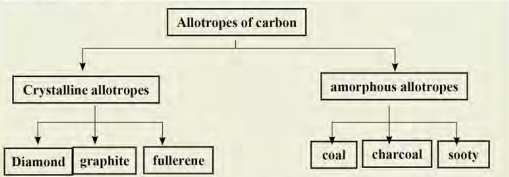
Allotropes of Carbon
Crystalline Allotropes:
Diamond
Graphite
Fullerene
Amorphous Allotropes:
Coal
Charcoal
Sooty
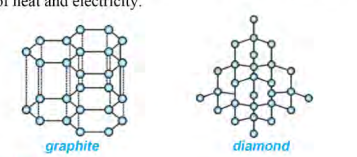
In graphite, three valence electrons form bonds and one electron remains free, making graphite a good conductor of heat and electricity. In diamond, all four valence electrons form bonds, so it does not conduct heat or electricity.
Physical Properties of Carbon
Carbon is found in solid state.
Carbon does not dissolve in water.
On heating at very high temperature, carbon directly changes into gaseous state.
Carbon is generally black, but diamond is colourless and transparent.
Carbon is non-lustrous, but diamond is lustrous.
Carbon is a bad conductor of heat and electricity, but graphite is a good conductor.
Density of carbon varies from 1.5 g/cm³ to 3.5 g/cm³ depending on its allotrope.
Chemical Properties of Carbon
1. Combustion
With excess oxygen:
C + O₂ → CO₂ + heat
With limited oxygen:
2C + O₂ → 2CO + heat
2. Reaction with Metals
Carbon reacts with metals at high temperature to form metallic carbides.
4Al + 3C → Al₄C₃
3Fe + C → Fe₃C
Ca + 2C → CaC₂
3. Reducing Property
Carbon removes oxygen from oxides of less reactive metals.
Fe₂O₃ + 3C → 2Fe + 3CO
ZnO + C → Zn + CO
PbO + C → Pb + CO
4. Reaction with Steam
When steam is passed over red hot carbon (1000°C), a mixture of carbon monoxide and hydrogen is formed. This mixture is called water gas.
C + H₂O → CO + H₂
Organic and Inorganic Compounds
Organic Compounds
Organic compounds are carbon compounds in which carbon is bonded with hydrogen. They mainly contain covalent bonds.
Examples: methane, methanol, urea, protein, carbohydrate, oil, insulin
Properties:
Mostly insoluble in water
Soluble in organic solvents
Burn easily
Low melting and boiling points
Inorganic Compounds
Inorganic compounds do not necessarily contain carbon. Carbonates, bicarbonates, carbides, CO and CO₂ are inorganic compounds.
Examples: acids, bases, salts, NaCl, HCl, Mg(OH)₂
Properties:
Mostly soluble in water
High melting and boiling points
Generally do not burn
Form ionic bonds
Difference Between Organic and Inorganic Compounds
| Property | Organic Compounds | Inorganic Compounds |
|---|---|---|
| Basis | Contain carbon (usually with H, O, N, etc.) | Do not contain carbon (or simple carbon compounds like CO₂) |
| Physical state | Solid, liquid or gas | Mostly solid |
| Bond type | Covalent | Mostly ionic |
| Ionization | Do not ionize | Ionize in water |
| Solubility | Insoluble in water | Soluble in water |
| Melting point | Low | High |
| Combustibility | Easily combustible | Non-combustible |
Uses of Organic Compounds in Daily Life
Food: Carbohydrates, proteins and vitamins in food.
Clothes: Cotton, silk and jute.
Medicine: Most medicines are organic compounds.
Energy: Petrol, diesel, kerosene and LPG.
Agriculture: Fertilizers, insecticides and food materials.
Cosmetics: Creams, soaps and beauty products.
Conclusion
Carbon is a unique and essential element due to its catenation and covalent bonding properties. It forms a large number of organic and inorganic compounds that are extremely useful in daily life and in sustaining living organisms.