1. Atmosphere and Composition of Air
- Atmosphere is the layer of gases surrounding the Earth.
- Composition (by volume): Nitrogen (N₂) – 78% Oxygen (O₂) – 21% Others (CO₂, Ar, H₂, O₃ etc.) – 1%
- 99% of air is nitrogen + oxygen.
- Gases are also present in plants, animals, water, food, minerals as compounds.

2. Hydrogen Gas (H₂)
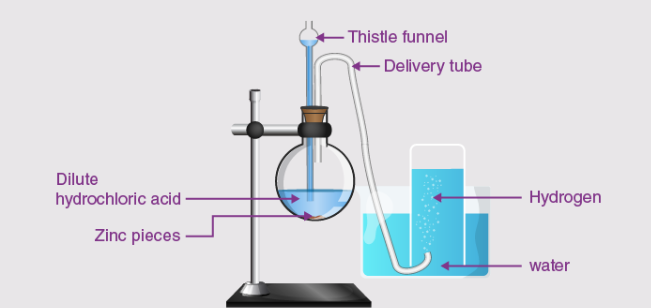
Laboratory Preparation
Zn (s) + 2HCl (aq) → ZnCl₂ (aq) + H₂ (g) ↑ (Using impure/granulated zinc + dilute HCl in Woulff’s bottle, collected by downward displacement of water)
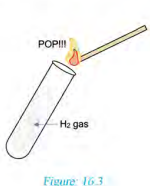
Test Burning splint near mouth of jar → pop sound with blue flame.
Physical Properties
- Colourless, odourless, tasteless
- Lightest gas (lighter than air)
- Insoluble in water
- Neutral (no effect on litmus)
- Liquefies at –253°C, solidifies at –259°C
Chemical Properties
- Combustible: 2H₂ + O₂ → 2H₂O
- Forms methane: C + 2H₂ → CH₄
- Forms hydrides: 2Na + H₂ → 2NaH
- Reduction: Fe₂O₃ + 3H₂ → 2Fe + 3H₂O
Precautions
1. All the apparatus should be washed well.
2. Impure zinc should be used.
3. It should be airtight when connecting apparatus. POP!!!
4. Dil. acid should be used; concentrated acids do not give hydrogen. H2 gas
5. Tip of the thistle funnel should be dipped but the tip of the delivery tube should not be dipped.
6. Gas jar should be completely filled with water.
Uses
- Reduction of metal oxides
- Manufacture of ammonia (Haber’s process)
- Hydrogenation of vegetable oil → ghee
- Rocket fuel
- Oxy-hydrogen flame for welding
3. Oxygen Gas (O₂)
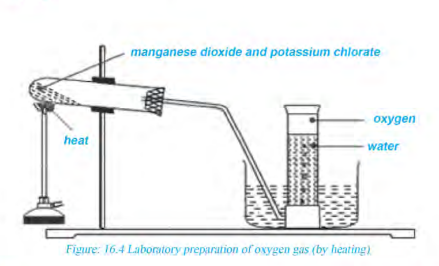
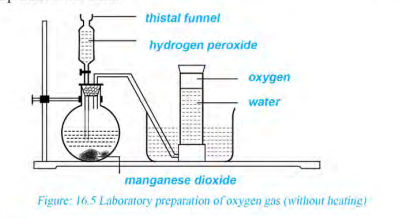
Laboratory Preparation
A. With heating: 2KClO₃ → 2KCl + 3O₂ ↑ (catalyst MnO₂, heat)
B. Without heating: 2H₂O₂ → 2H₂O + O₂ ↑ (catalyst MnO₂)
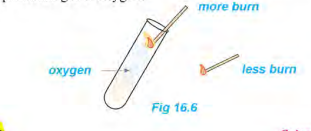
Test Burning splint → burns with brighter/larger flame.
Physical Properties
- Colourless, odourless, tasteless
- Slightly heavier than air
- Partially soluble in water
- Neutral (no litmus effect)
- Liquefies at –183°C, solidifies at –219°C
Chemical Properties
- Supports combustion
- Forms oxides with metals: 2Mg + O₂ → 2MgO
- Forms oxides with non-metals: C + O₂ → CO₂
- Combustion of hydrocarbons: CH₄ + 2O₂ → CO₂ + 2H₂O + energy
- Respiration: C₆H₁₂O₆ + 6O₂ → 6CO₂ + 6H₂O + energy
Uses
- Respiration of living beings
- Welding (oxy-acetylene / oxy-hydrogen flame)
- Artificial respiration (hospitals)
- Steel manufacturing
- High altitude (mountaineering, diving, space)
4. Ozone (O₃)
- Triatomic form of oxygen (blue gas, dense blue liquid)
- Formation: O₂ + O → O₃ (in stratosphere by UV rays)
- Ozone layer: 25–40 km above Earth’s surface
Importance of Ozone Layer
- Absorbs harmful ultraviolet (UV) rays from sun
- Protects living beings from skin cancer, cataract, immune damage
- Maintains climate and temperature balance
- Protects ecosystems (plants, animals, aquatic life)
Ozone Layer Depletion
- Main cause: Chlorofluorocarbons (CFCs)
- Equation: CFCl₃ → CFCl₂ + Cl (UV rays) → Cl breaks O₃ chain
- Other causes: methyl bromide, oxides of nitrogen, carbon tetrachloride
Effects of Depletion
- Increased UV rays reach Earth
- Skin cancer, cataract, eye burning
- Reduced photosynthesis → lower crop yield
- Global warming (temperature rise)
- Weak immune system, reduced reproduction
Ways to Protect Ozone Layer
- Reduce use of CFCs (refrigerators, AC, sprays)
- Use HFCs instead of CFCs
- Minimize nitrogenous fertilizers
- Reduce petroleum vehicles → promote electric vehicles
5. Nitrogen Gas (N₂)
Laboratory Preparation
NaNO₂ + NH₄Cl → N₂ ↑ + NaCl + 2H₂O (heat gently)
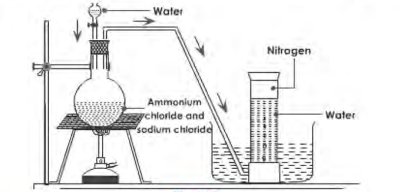
Test Burning Mg ribbon in jar → continues burning → yellow powder (Mg₃N₂) → add water → smell of ammonia
Physical Properties
- Colourless, odourless, tasteless
- Lighter than air
- Sparingly soluble in water
- Neutral
- Neither burns nor supports burning
- Liquefies at –196°C
Chemical Properties
- Very inert at normal conditions
- Forms ammonia: N₂ + 3H₂ → 2NH₃ (450°C, 500 atm, Fe catalyst)
- Forms nitric oxide: N₂ + O₂ → 2NO (electric arc)
- Forms nitrides: 3Mg + N₂ → Mg₃N₂ (heat)
Uses
- Manufacture of ammonia and nitric acid → fertilizers
- Food packaging (prevents spoilage)
- Filling electric bulbs (prevents filament burning)
- Liquid nitrogen for cooling refrigerators