These notes explore how ICT uses electronic devices and networks to store, process, and share information quickly, including the role of artificial satellites in orbits (LEO, MEO, GEO) and Nepal's first satellite, NepaliSat-1.You will understand telecommunication principles (transmitter, channel, receiver; AM/FM modulation), modern tools like internet, email, Wi-Fi, GPS, and their daily applications, along with online security measures (privacy, cyberbullying, digital footprint, firewall, antivirus).This chapter helps you grasp how ICT has revolutionized communication, from traditional radio/TV to satellite and internet-based systems – essential for understanding technology's impact!
1. Introduction to ICT in Modern Age
- Definition: ICT is the use of electronic devices (computers, mobiles, satellites) to store, process, and communicate information (sound, text, images, videos) quickly across the world.
- Examples from News:
- Expansion of telecommunication in rural Jajarkot.
- Launch of NepaliSat-1 (Nepal's first satellite).
- Use of satellite radio collars on elephants for tracking.
- Changes in TV viewing via internet (e.g., Nepal TV free-to-air, IPTV).
- Activity 13.1: Search news headlines online and discuss technology type, uses, advantages.
2. Artificial Satellites
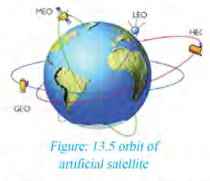
- What are Satellites?: Man-made objects orbiting Earth. Launched by rockets, revolve without extra fuel (no air friction), powered by solar energy.
- First Satellite: Sputnik-1 (USSR, 1957).
- Communication: Uplink (Earth → satellite), Downlink (satellite → Earth) using microwaves.
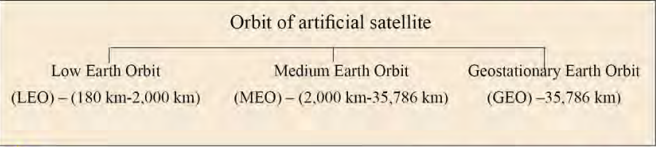
Sub-Components: Types of Orbits
- LEO (Low Earth Orbit): 180–2,000 km
- Short revolution time (e.g., 90 min).
- Uses: Earth observation, photos, scientific research.
- Example: International Space Station (ISS) at 408 km.
- MEO (Medium Earth Orbit): 2,000–35,786 km
- Revolution ~12 hours.
- Uses: Navigation (GPS – 24 satellites for global location).
- Example: GPS system.
- GEO (Geostationary Orbit): 35,786 km (above equator)
- Revolution matches Earth's rotation (23h 56min) → appears stationary.
- Uses: TV, telephone, mobile, internet broadcasting.
- Activity 13.2: Fill table on orbit characteristics, purpose, examples.
Nepal's Satellite: NepaliSat-1
- Details: Nanosatellite (1.3 kg cube), built by Nepali students (Aavash Maskey, Hariram Shrestha) at Kyutech University, Japan with NAST support.
- Launch: April 2019 from USA, released from ISS in June 2019.
- Orbit: ~400 km (LEO), revolution 90 min, visible 6-10 min over Nepal.
- Purpose: Take photos of Nepal's geography, forests, glaciers, mountains, roads.
- Activity 13.3: Discuss NepaliSat-1 using audio-visual materials.
3. Use of ICT Devices (Activity 13.4 – Daily Life Tools)
- Magazine: Printed knowledge, news.
- Radio: Fast audio broadcasting (news, songs, stories).
- Television: Visual programs, live events.
- Telephone/Fax: Voice calls, document transfer.
- Mobile Phone: Calls, messages, internet.
- Wi-Fi: Wireless networking.
- Email: Fast text + files.
- Internet: Search, online services.
- GPS: Location finding, navigation.
4. Telecommunication
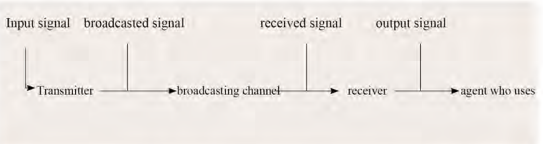
- Definition: Transfer of signals (sound, picture, data) using wire, optical fiber, waves, satellites.
- Examples: Telephone, fax, mobile, radio/TV broadcasting, internet.
Working Principle (Activity 13.7)
- Three Parts:
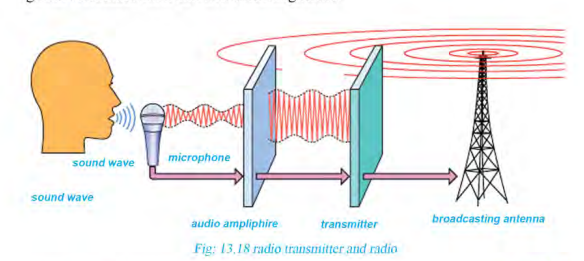
- Transmitter: Converts input (voice/image) to signals.
- Channel: Wire, radio waves, microwave, optical fiber.
- Receiver: Converts signals back to original form.
Modulation & Demodulation
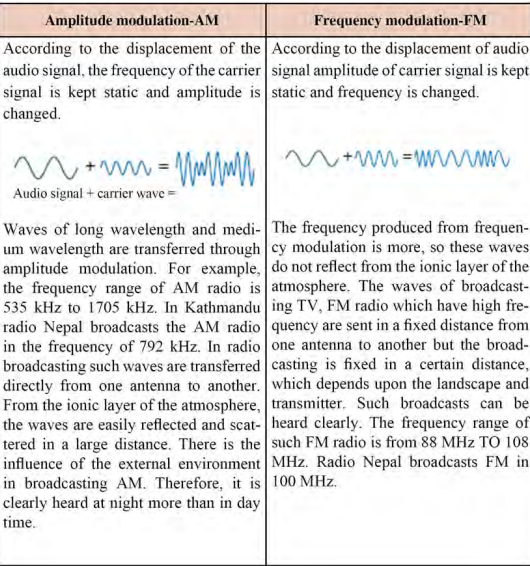
- Why Modulation?: Information signals weak → mix with strong carrier waves (radio waves).
- Types:
- AM (Amplitude Modulation): Changes wave height (amplitude).
- Long/medium waves, reflects from ionosphere → long distance.
- Frequency: 535–1705 kHz (e.g., Radio Nepal 792 kHz).
- Clearer at night.
- FM (Frequency Modulation): Changes wave frequency.
- High frequency, no reflection → limited distance but clear sound.
- Frequency: 88–108 MHz (e.g., Radio Nepal 100 MHz).
- AM (Amplitude Modulation): Changes wave height (amplitude).
- Activity 13.8 & 13.9: Investigate radio waves, fill tables on modulation.
5. Internet as Modern Communication Tool (Activity 13.10)
- Changes Due to Internet:
- Letters/Fax → Email/Gmail.
- Cable TV → IPTV/online streaming.
- Audio calls → Video calls (cheap).
- Paper news → Online news (instant).
- Activity 13.11: Step-by-step create Gmail account and send email.
6. Using Internet for Study Materials (Activity 13.12)
- Search Operators:
- site: → specific website.
- inurl: → word in URL.
- filetype: → file type (e.g., pptx, docx, pdf).
- OR, AND, quotes for exact phrase.
- Authenticity: Check .edu/.gov/.org sites, date, copyright.
- Copyright: Mention source if used.
7. Online Security Measures (Activity 13.13)
- Online Privacy: Check HTTPS, avoid unknown links.
- Cyberbullying: Don't accept strangers, report harassment.
- Digital Footprint: Online actions permanent (even deleted).
- Firewall: Blocks unsafe signals (turn on in computer).
- Antivirus: Removes viruses (e.g., Windows Defender).
- Activity 13.14: Observe firewall/antivirus, discuss cyber-attacks.
- Project Work: Study cybercrimes in Nepal (ATM hacking, phishing, etc.).