1. Introduction to Energy
Energy is the ability to do work. Energy exists in different forms such as heat, light, electrical, chemical, mechanical, and nuclear energy.
Examples of energy conversion:
- Heat → Water vapour (drying clothes)
- Electrical → Mechanical (electric scooter)
- Chemical → Heat (LPG gas for cooking)
- Solar → Electrical (solar panel)
2. Source of Energy
Any object or substance that can provide useful energy is called a source of energy.
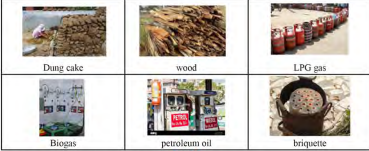
Common sources of energy:
- Firewood
- Dung cake
- LPG gas
- Biogas
- Petrol
- Kerosene
- Solar energy
- Hydroelectricity
3. Types of Sources of Energy
(a) Non-renewable Sources of Energy
Definition:
Sources of energy that take millions of years to form and cannot be replenished in a short time after exhaustion are called non-renewable sources of energy.
Examples:
- Coal
- Petroleum
- Natural gas
- Kerosene
- Diesel
Disadvantages:
- Limited in quantity
- Cause air pollution
- Expensive in the long run
(b) Renewable Sources of Energy
Definition:
Sources of energy that are continuously produced in nature and can be replenished in a short time are called renewable sources of energy.
Examples:
- Solar energy
- Wind energy
- Hydroelectricity
- Biogas
- Biomass
- Briquettes
Advantages:
- Pollution-free
- Sustainable
- Environment-friendly
The Sun: The Ultimate Source of Energy
The sun is the main and ultimate source of energy for the earth.
Almost all forms of energy are directly or indirectly derived from solar energy.
Reasons:
- Drives water cycle
- Enables photosynthesis
- Produces wind
- Helps form fossil fuels
4. Solar Energy
Solar energy is the heat and light energy received from the Sun. The Sun is the main and ultimate source of energy for the Earth.
Importance of Solar Energy:
- Used in water cycle
- Supports photosynthesis
- Used for drying clothes and crops
- Produces electricity through solar panels
5. Nuclear Fusion in the Sun
The Sun produces energy through thermonuclear fusion.
What is Thermonuclear Fusion?
Thermonuclear fusion is the process in which hydrogen nuclei fuse to form helium nuclei at very high temperature and pressure, releasing a huge amount of energy.
Conditions required:
- Very high temperature
- Enormous pressure
- Large amount of hydrogen
6. Sun as the Ultimate Source of Energy
Almost all energy sources are derived from solar energy directly or indirectly.
Examples:
Hydroelectricity → formed by solar-driven water cycle
Fossil fuels → formed from plants and animals that stored solar energy
Wind energy → caused by uneven heating of air by the Sun
Bioenergy → stored solar energy in plants and animals
7. Solar Energy Harvesting Technologies
(a) Solar Panel
Definition:
A solar panel is a device made of photovoltaic cells that converts solar energy into electrical energy.
Working Principle:
Sunlight strikes silicon cells → electrons flow → electricity produced
(b) Solar Lamp & Solar Street Lamp
Components:
Solar panel, battery, controller, LED lamp
Working:
- Day: battery charged
- Night: battery supplies electricity to lamp
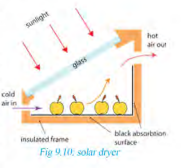
(c) Solar Dryer
Used to dry vegetables, fruits, herbs hygienically and quickly.
Advantages:
- Saves time
- Hygienic
- Less contamination
(d) Solar Water Heater
Uses evacuated tubes to heat water using solar radiation.
Advantage:
Keeps water hot even at night due to insulation
(e) Solar Cooker
Uses a concave mirror to focus sunlight for cooking food.
8. Bioenergy
Bioenergy is the energy obtained from organic materials of plants and animals.
Examples:
- Firewood
- Dung cake
- Straw
- Husk
- Biogas
Bioenergy is renewable and widely used in rural areas.
9. Biomass and Briquettes
Biomass:
Dry organic matter such as leaves, sawdust, crop residues.
Briquettes:
Compressed blocks of biomass used as fuel.
Types of Briquettes:
Carbonized briquette – made from charcoal ,Less Smoke and High Heat
Non-carbonized briquette – made from dung, husk, sawdust and used in rural areas.
Advantages of Briquettes:
- Less smoke
- Saves forest
- Easy to transport
- Produces more heat
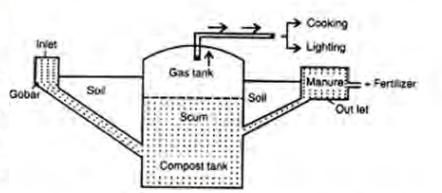
10. Biogas
Biogas is produced by the decomposition of organic matter in the absence of oxygen.
Main Components:
- Methane
- Carbon dioxide
- Hydrogen sulphide
- Water vapour
Construction of Biogas Plant
Parts:
- Mixing tank
- Digester
- Gas dome
- Outlet chamber
Uses:
- Cooking
- Lighting
- Fertilizer (slurry)
Advantages:
- Clean fuel
- Reduces air pollution
- Produces good fertilizer
- Saves firewood
11. Hydroelectricity
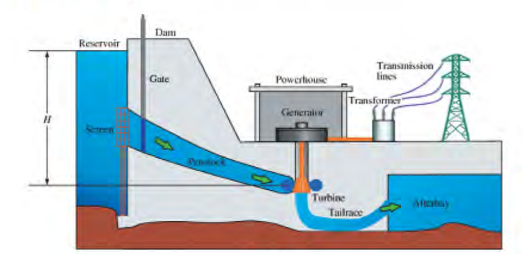
Electricity generated by flowing water using turbines and generators.
Advantages:
- Renewable
- Pollution-free
- Cheap in long term
- Suitable for Nepal
12. Alternative Sources of Energy in Nepal
Alternative energy replaces traditional energy sources.
Examples:
- Solar energy
- Biogas
- Wind energy
- Briquettes
AEPC (Alternative Energy Promotion Centre):
Established in 1996 AD to promote renewable energy in Nepal.
13. Wind Energy
Electricity is produced using wind turbines.
Potential areas in Nepal: Mustang, Sindhuli