1. Introduction to Simple Machines
A simple machine is a device that helps us do work easily, faster, and with less effort by changing the magnitude or direction of force.
Simple machines do not require electricity or fuel; human effort is sufficient.
Examples:
Screw, pulley, wheel and axle, inclined plane, wedge, axe, sickle, jack, snuffers.
2. Types of Simple Machines
Based on structure, simple machines are of four main types:
- Lever
- Pulley
- Wheel and Axle
- Inclined Plane
Wedge and screw are special forms of an inclined plane.
3. Mechanical Advantage (MA)
Mechanical advantage tells us how much a machine multiplies force.

MA has no unit
If MA > 1 → machine magnifies force
If MA = 1 → only changes direction of force
4. Velocity Ratio (VR)
Velocity ratio shows the distance relation between effort and load.

- VR has no unit
- VR depends on structure, not friction
5. Pulley
A pulley consists of a wheel with a groove and a rope passing over it.
Types of Pulley:
Fixed Pulley
- Changes direction of force
- MA = 1, VR = 1
Movable Pulley
- Reduces effort
- Load supported by two rope segments
- VR = 2
Combined Pulley
- Combination of fixed and movable pulleys
- MA increases with number of pulleys

6. Inclined Plane
An inclined plane is a slanted surface used to lift heavy loads with less effort.
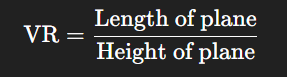
- Increasing length → less effort
- Used in ramps, loading trucks, winding roads
7. Wedge
A wedge is made of two inclined planes joined together.
Examples:
Knife, axe, chisel
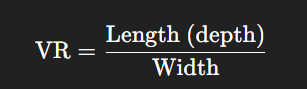
- Used for cutting, splitting, penetrating
8. Screw
A screw is a spiral inclined plane wrapped around a cylinder.
- Distance between two threads = Pitch
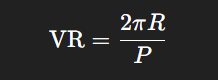
Where:
R = radius of head
P = pitch
Examples:
Screw jack, bolts, nuts
9. Wheel and Axle
It consists of a large wheel and a small axle fixed on the same axis.
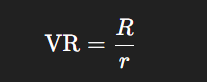
Where:
- R = radius of wheel
- r = radius of axle
It is called a continuous lever.
10. Efficiency (η)
Efficiency shows how much input energy is converted into useful output.
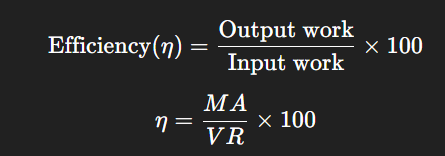
- Efficiency is always less than 100%
- Due to friction, energy is lost
11. Perfect Machine
- A perfect machine has:
- Efficiency = 100%
- MA = VR
- No friction
Perfect machines do not exist in reality
12. Complex Machine
A complex machine is formed by combining two or more simple machines.
Examples:
- Crane → Lever + Pulley
- Bicycle → Wheel and axle + lever
- Sewing machine → Multiple simple machines