Introduction to Honey Bees
Honey bees are social insects that live in colonies inside hives. They are classified under the phylum Arthropoda. Bees are hardworking, disciplined, and have a well-organized division of labor. They feed on nectar and pollen from flowers to survive and produce honey.
Types of Hives
Bees make natural hives in trees, but humans can create artificial hives for farming honey.
Artificial hives help in honey production, pollination, and wax production. Farming bees commercially is called apiculture, and the study of bees is melittology or apicology.
Types of Honey Bees
Queen Bee
Largest bee in the hive; elongated body.
Lays eggs and regulates hive activities using pheromones.
Lives 2–5 years and ensures continuity of the colony.
Drone Bee
Male bee; larger than worker but smaller than queen.
Fertilizes the queen; does not produce honey, pollen, or wax.
Lives ~2 months; dies after mating.
Worker Bee
Smallest bee; female; extremely hardworking.
Collects nectar and pollen, constructs hives, feeds larvae, and protects the hive.
Lives 6 weeks to 6 months; forms the majority of the hive (20,000–80,000 bees).
Physical Structure of Honey Bees
Body divided into head, thorax, and abdomen.
Head: compound eyes, antennae, and mouthparts.
Thorax: 3 segments with 3 pairs of legs and 2 pairs of wings.
Abdomen: 6–7 segments; contains stinger in females.
Worker bees have pollen baskets on legs to carry pollen.
Life Cycle of Honey Bees
Honey bees undergo complete metamorphosis in four stages:
Egg – Laid in brood cells; fertilized eggs become queen or worker, unfertilized eggs become drones.
Larva – Hatches in 3 days; fed royal jelly to become queen or bee bread for workers/drones.
Pupa – Inactive phase; body structures like wings and legs develop.
Adult – Emerges from the cell; starts working immediately (inside or outside hive based on age).
Division of Work by Worker Bees
1–3 days: Clean hive and brood.
4–6 days: Feed larvae with honey and royal jelly.
7–11 days: Care for brood.
12–17 days: Produce wax, build combs.
18–20 days: Develop stinger and defend hive.
After 21 days: Collect nectar, pollen, and water.
Honey Production
Made by evaporating water from nectar using wind and wing movement.
Contains 80–85% carbohydrates, 15–17% water, proteins, vitamins, and amino acids.
Honey quality depends on the type of flowers bees visit.
Uses of Honey Bees
Teach humans about hard work, discipline, and teamwork.
Produce honey used in food and medicine.
Help in pollination, increasing crop production.
Produce beeswax for cosmetics, candles, and creams.
Apiculture provides income for farmers.
Key Points to Remember for SEE
Types of bees: Queen, Drone, Worker.
Life cycle stages: Egg → Larva → Pupa → Adult.
Worker bees have different roles according to age.
Bees are important for ecosystem and economy.
TypeSizeFunctionLife SpanQueenLargestLays eggs, controls hive, produces pheromones2–5 yearsDroneMediumFertilizes queen, no sting~2 monthsWorkerSmallestCollect nectar/pollen, make honey/wax, protect hive, care for young6 weeks–6 months
Quick Table of Development Time
Bee TypeEggLarvapupaTotalQueen35.57.516 daysWorker361221 daysDrone371424 daysGallery
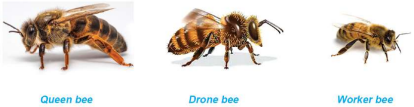
Types of Honey Bees
Types of Honey Bees
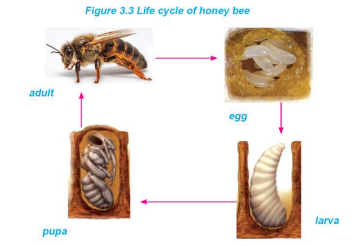
Life Cycle of Honey Bees
Life Cycle of Honey Bees
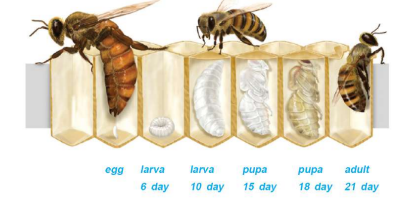
Various Stages of Bees
Various Stages of Bees